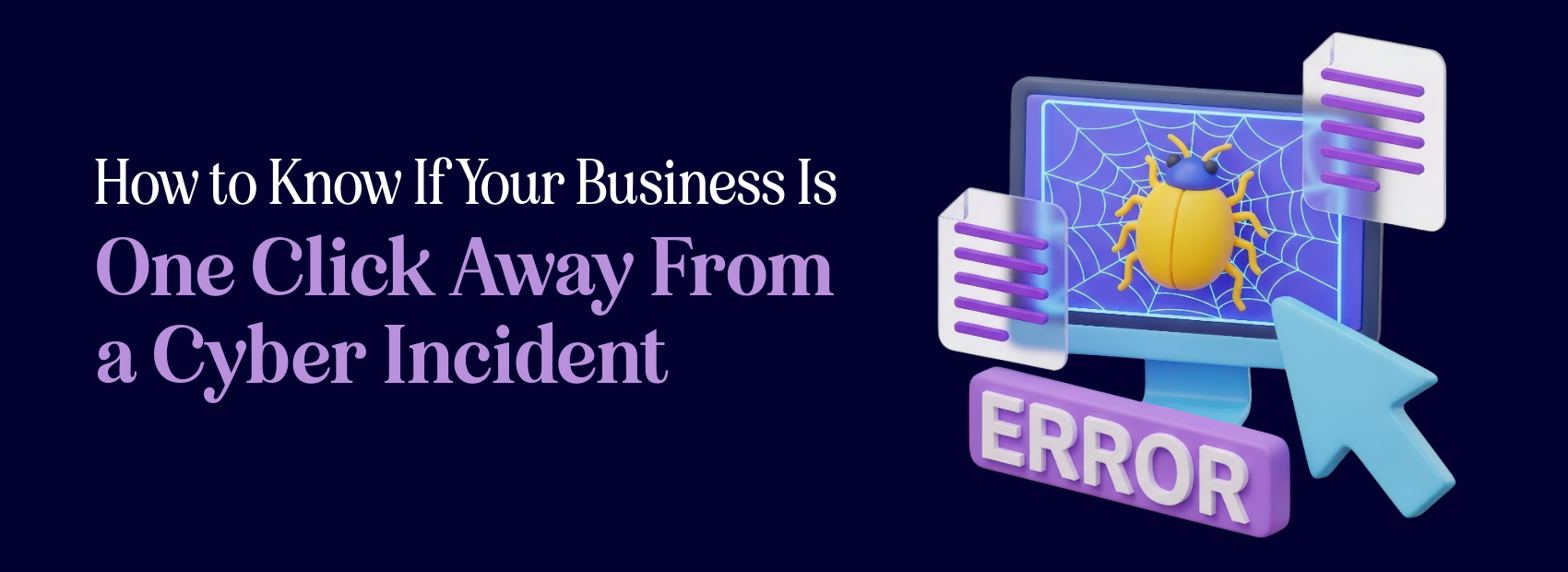
SMB Cyber Risk Is No Longer About Size
SMB cyber risk readiness is no longer optional in 2026. Cybercriminals do not target companies based on size.
They target behavior, gaps, and opportunities.
Many incidents start with one simple action by:
- A click.
- A reply.
- A download.
Often, there is no warning until it is too late.
The “One Click” Myth Most SMBs Believe
Many business owners believe cyber incidents require:
- Advanced hacking
- Sophisticated tools
- High-value targets
That belief is dangerous.
Most cyber incidents begin with a:
- phishing email
- fake login page
- malicious attachment
The attacker does not break in. They are invited in.
Warning Sign #1: Employees Are Not Trained Regularly
Security tools matter. However, people still make the first decision.
If employees:
- Have not received recent training
- Are unsure how to spot phishing
- Are afraid to report mistakes
Then the risk increases dramatically. Training once a year is not enough. Threats evolve faster than policies.
Warning Sign #2: Passwords Are Still the Primary Defense
Passwords alone are weak. Reuse makes them weaker.
If your business relies only on passwords:
- Accounts are vulnerable
- Credential theft spreads quickly
- Access becomes difficult to control
Multi-factor authentication reduces risk significantly. Yet many SMBs still delay adoption. One stolen password can unlock everything.
Warning Sign #3: Software Updates Are Delayed or Ignored
Unpatched systems are easy targets. Attackers actively scan for known vulnerabilities.
If updates are:
- Deferred to “later.”
- Applied inconsistently
- Left to end users
Then risk compounds quietly. Most ransomware attacks exploit old weaknesses. Not new ones.
Warning Sign #4: Access Is Not Reviewed Regularly
User access grows over time. Rarely does it shrink.
Former employees.
Temporary contractors.
Old permissions.
If access reviews are not routine:
- Sensitive data remains exposed
- Accountability disappears
- Breaches go unnoticed longer
Least-privilege access reduces blast radius. Without it, damage spreads.
Warning Sign #5: Backups Are Untested
Backups provide confidence. Untested backups provide false comfort.
Many SMBs assume backups work. They only learn otherwise during recovery.
Testing ensures:
- Data is complete
- Recovery time is acceptable
- Systems can actually restore
Without testing, backups are a gamble.
Warning Sign #6: Cyber Insurance Is the Only Plan
Cyber insurance is important. However, it is not a substitute for controls.
In 2026, insurers expect:
- Documented security practices
- User training
- Access controls
- Incident response plans
Without these, claims may be denied. Insurance pays after damage. Preparation reduces damage.
Why “We Haven’t Had an Incident” Is Risky Thinking
Past luck does not equal future safety. Threats evolve constantly.
As businesses:
- Use more cloud services
- Enable remote access
- Integrate vendors
Attack surfaces expand. Waiting for an incident to improve security is costly.
How One Click Becomes a Business Disruption
A single click can lead to:
- System lockdowns
- Data exposure
- Operational downtime
- Customer trust loss
Recovery takes time. Reputation takes longer. The cost is rarely just financial.
How Proactive Cyber Readiness Reduces Risk
Proactive cybersecurity focuses on:
- Training people
- Hardening systems
- Monitoring behavior
- Preparing response plans
This approach:
- Reduces incident likelihood
- Limits impact
- Improves recovery confidence
Security becomes part of operations, not an emergency reaction.
What SMB Leaders Should Review Quarterly
A simple quarterly cyber review includes:
- User access checks
- Patch status reviews
- Backup testing
- Phishing simulations
- Incident response readiness
Consistency matters more than complexity.
Final Thought: One Click Is All It Takes
SMB cyber risk readiness is about awareness and discipline.
Not fear.
Not complexity.
The goal is not perfection.
It is preparedness.
Because in today’s threat landscape,
one click can change everything.
Want to know where your biggest cyber risks actually are?
Start with a 15-Minute Clarity Call.
No cost.
No obligation.
High value.